The landscape of American livestock is shifting toward efficiency, manageability, and niche marketability. Within this transition, the Harlequin sheep has emerged as a premier choice for small-scale agriculturalists and hobby farmers. As a uniquely American miniature breed, the Harlequin combines a compact physical footprint with a high-utility profile. Whether your goal is sustainable land management, high-quality fiber production, or establishing a registered breeding program, understanding the technical advantages of this breed is essential.
If you are operating on limited acreage, then miniature sheep are the most logical livestock choice. Standard sheep breeds often require significant pasture rotation and heavy-duty handling facilities that are impractical for a small farm. Harlequins typically stand under 24 inches at the shoulder and weigh between 80 and 150 pounds. This reduced scale allows for a higher stocking density per acre without the environmental degradation associated with heavier livestock.
The Harlequin is not simply a "downsized" version of a commercial breed; it is a purposeful development. By selecting for a smaller frame, breeders have created an animal that is easier to shear, vaccinate, and transport. For the hobby farm livestock owner, this translates to lower overhead costs and a lower risk of injury during routine maintenance.
One of the most significant technical markers of the Harlequin breed is its naturally polled (hornless) status. In a management setting, horns present a liability for both the handler and the flock. Horned animals can become entangled in fencing or cause injury to stablemates. By prioritizing polled genetics, the Harlequin Sheep Society ensures a safer environment for families and 4-H participants.
Furthermore, these sheep are recognized for their hardiness. They demonstrate a high degree of resistance to common parasites and possess a sturdy constitution that allows them to thrive in various climates. If you are looking for a breed that requires less veterinary intervention and shows high lambing vigor, the Harlequin meets those requirements.
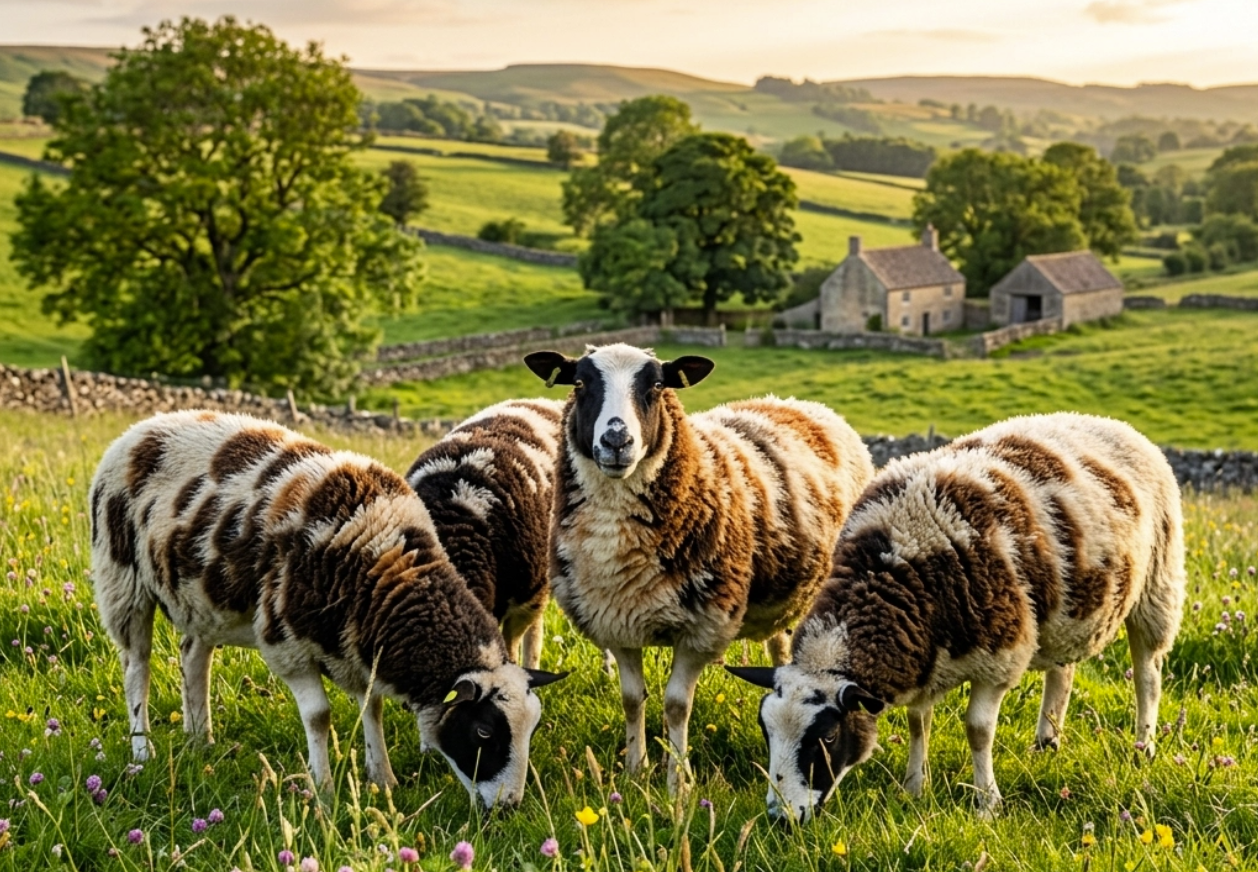
The visual identity of the Harlequin sheep is a primary driver of its rising popularity. The breed is famous for its striking "painted" or spotted coat patterns. Most lambs are born with distinct black and white markings, which often evolve as the animal matures. It is common for these colors to transition into shades of cocoa brown, blue-gray, or deep black.
In addition to coat patterns, many Harlequins possess bright blue eyes: a rare trait in the sheep world that significantly increases their market value. When evaluating a sheep for purchase, refer to the Breed Standard to ensure the animal meets the official criteria for conformation and color.
Success in livestock ownership often depends on the temperament of the animals. Harlequins are specifically bred for a docile, approachable nature. This makes them the ultimate project for young breeders involved in 4-H or FFA.
The ease of handling allows children to take a lead role in the care and showing of the animals. Because they are not easily spooked and lack the aggressive tendencies of some larger breeds, Harlequins foster a positive learning environment for the next generation of farmers.
For fiber artists, the Harlequin sheep offers a high-quality product that rivals more established wool breeds. Their fleece is classified as medium-character wool, typically falling between 25 and 35 microns. This provides a soft yet durable fiber suitable for a wide range of textile applications.
Fleece Specifications at a Glance:
Because the wool often contains multiple colors within a single fleece, it is highly sought after by hand-spinners who value natural variegation. If you intend to market your wool, maintaining a clean coat and consistent shearing schedule is mandatory to fetch premium prices in the fiber market.
Investing in Harlequin sheep is a strategic business move for landowners. In many states, maintaining a breeding flock of registered miniature sheep allows a property to qualify for agricultural land valuations (Ag Exemptions). This can result in significant property tax savings.
The market for Harlequins is currently in a high-growth phase. As a relatively rare breed with a growing registry, the demand for high-quality breeding stock frequently outstrips supply. Early adopters who focus on the Harlequin Generations and maintain meticulous records have the opportunity to establish themselves as foundational breeders in their region.
If you are ready to begin, consult our Breeder Listing to find reputable sources for your initial flock. Starting with registered stock is the only way to ensure the long-term value and integrity of your investment.
To maximize the health and productivity of your Harlequins, adhere to the following management standards:
The Harlequin Sheep Society serves as the central authority for the breed. We maintain the registry to preserve the genetic purity and standards of these unique animals. By registering your sheep, you contribute to a collective effort to stabilize the breed’s population and protect its future.
The Society provides resources for both novice and experienced owners. If you are looking for inspiration or technical advice, explore our Breeder Spotlights to see how others have integrated Harlequins into their farm operations.
The rise of the Harlequin sheep is not a trend; it is a response to the practical needs of modern agriculture. Their small size, striking appearance, and docile temperament make them a superior choice for any hobby farm livestock program.
If you believe that Harlequin sheep are the right fit for your goals, start by researching the Breed Standard and connecting with established breeders. By focusing on quality and registration from day one, you position yourself for success in this rewarding and growing community.