Harlequin Sheep Vs Babydoll Sheep: Which Is Better For Your Small-Scale Farm?
Choosing the right livestock for a small-scale farm or hobby acreage requires a balance between utility, manageability, and personal goals. Among the most popular choices for those seeking smaller livestock are miniature sheep breeds. Specifically, the Babydoll Southdown and the Harlequin sheep often top the list. While they share some similarities: primarily their diminutive size: they are distinct breeds with different histories, physical standards, and management requirements.
This guide provides a technical comparison to help you determine which breed aligns with your operational objectives.
The Babydoll Southdown: An Established Classic
The Babydoll Southdown (often simply called "Babydolls") is a heritage breed known for its "smiling" face and sturdy, low-slung body. Originating from the Southdown sheep of Sussex, England, these sheep were bred down in size to meet the needs of smaller farms. They generally stand between 18 and 24 inches at the shoulder.
Babydolls are frequently utilized as "organic mowers" in vineyards and orchards. Their short stature prevents them from reaching high-hanging fruit or damaging low tree limbs, while their grazing habits keep grass levels controlled. They are known for a docile, somewhat reserved temperament.
The Harlequin Sheep: A Unique American Breed
The Harlequin sheep is a distinct American breed that has gained significant traction among fiber artists and hobby farmers. Unlike many miniature breeds that are simply smaller versions of larger commercial sheep, the Harlequin was developed with specific aesthetic and functional goals in mind.
Harlequins are naturally polled (hornless), which reduces the risk of injury to handlers and other livestock. They are characterized by their striking, multi-colored "spotted" fleece and often feature bright blue eyes. If you are looking for a breed that stands out visually while maintaining high production standards, the Harlequin is the primary candidate.
Physical Comparison: Size and Conformation
When evaluating small sheep breeds, size is a critical factor for infrastructure planning.
- Babydoll Southdown: Target height is 18–24 inches. They have a blocky, heavy-boned conformation. Their faces and legs are typically covered in wool, which requires additional grooming to prevent "wool blindness."
- Harlequin Sheep: The target height is 19–24 inches. While they fall into the same height bracket as Babydolls, Harlequins often appear more refined. Their faces and legs are generally less "wooly," which makes them easier to maintain in environments with burrs or heavy brush.
If your farm has limited space or you require animals that are easy for children or elderly handlers to manage, both breeds are suitable. However, the Harlequin’s naturally polled status is a significant safety advantage. For more details on the specific physical requirements, refer to our Breed Standard.
Temperament and Interaction
Temperament often dictates the daily enjoyment of owning sheep.
Babydolls are widely considered gentle, but they can be shy or reserved. They are content to graze quietly and may require more time to bond with human handlers.
Harlequin sheep are frequently described as having "joyful" personalities. They are exceptionally curious and friendly, often approaching humans in the pasture without the need for grain as an incentive. This makes them ideal for farms that prioritize animal-human interaction or those looking to engage in educational programs.
Fleece Quality and Fiber Utility
For many small-scale farmers, the "paycheck" from the flock comes in the form of wool. This is where the two breeds diverge most sharply.
Babydoll Fleece
Babydoll wool is short, springy, and soft, typically falling in the 24–30 micron range. It is often compared to a "down" type wool. It is excellent for blending with other fibers but lacks the variety in color that many hand-spinners crave. Babydolls are usually solid white or solid black (which fades to a "dilute" brown or grey over time).
Harlequin Fleece
Harlequin fleece is prized for its "cashmere-like" quality. It is exceptionally fine and comes in a variety of patterns and colors, including tri-color spots. Because Harlequins can produce such varied wool in a single shearing, they are a favorite for boutique fiber artists. The staple length and texture can vary, giving the breeder more options for specialized production.
If your goal is to sell high-value fleeces to the hand-spinning community, the Harlequin offers a superior market advantage due to its rarity and color diversity.
Health, Hardiness, and Management
Livestock longevity is a direct result of breed hardiness.
Worm Resistance: One of the most significant advantages of the Harlequin sheep is its superior resistance to internal parasites. In many parts of the United States, especially the humid South, parasite loads (like the Barber Pole worm) can be devastating. Harlequins have been bred to be hardy and resilient, often requiring fewer chemical interventions than other breeds.
Lambing: Both breeds are known to be excellent mothers. Babydolls often lamb unassisted and are very protective. Harlequins are similarly hardy, with a strong instinct for nursing and caring for multiples.
Feeding: Both are "easy keepers." On a small farm, it is easy to overfeed these breeds, leading to obesity. Strict pasture management and a high-quality mineral program are required for both.
Decision Framework: Which Breed Fits Your Farm?
To make an informed decision, apply the following logical structures to your specific situation:
- IF your primary goal is low-maintenance "mowing" in an established orchard where aesthetics are secondary to utility, THEN the Babydoll Southdown is a practical, well-established choice.
- IF you intend to sell registered breeding stock or high-end artisan fiber, THEN the Harlequin sheep offers a higher return on investment due to its growing popularity and unique fleece.
- IF you have children or are a first-time owner concerned about safety, THEN the naturally polled and friendly Harlequin is the safer recommendation.
- IF you live in a region with high parasite pressure, THEN prioritize Harlequins for their documented worm resistance.
Long-term Value and Market Trends
The Babydoll market is mature. While demand remains steady, the market is saturated in many regions, which can drive down the price of lambs.
In contrast, the Harlequin sheep is still in a growth phase. As more people discover the benefits of this colorful, American-developed breed, the demand for registered stock continues to climb annually. Investing in Harlequins now positions a small farm to be a primary provider of breeding stock in a rising market.
Documentation and lineage are vital for maintaining the value of your flock. We recommend all prospective owners familiarize themselves with the Registration process to ensure they are purchasing and maintaining quality animals that meet the breed's rigorous standards.
Conclusion
Neither breed is a poor choice for the small-scale farmer, but they serve different niches. The Babydoll is a traditional, reliable "teddy bear" of the sheep world. The Harlequin is a versatile, colorful, and hardy newcomer that offers significant advantages in fiber quality and temperament.
For those ready to start their journey, we invite you to view our 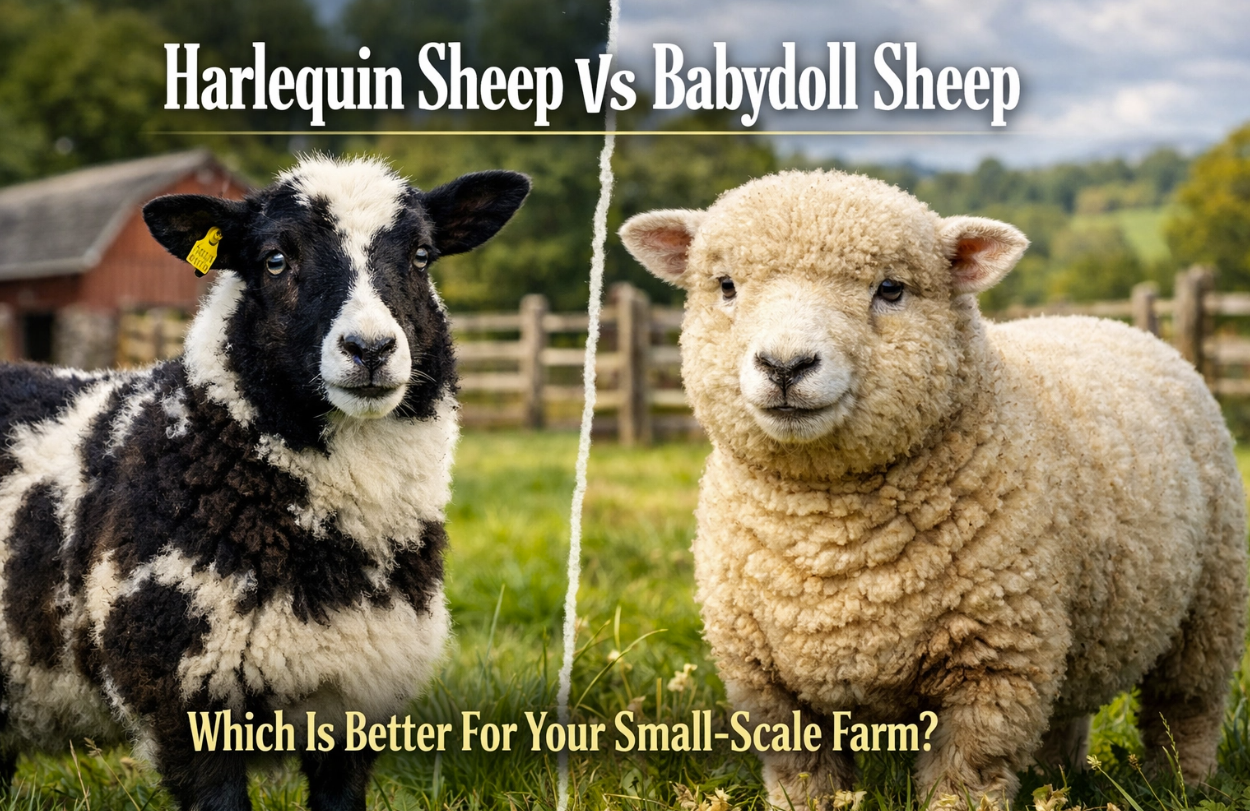 Breeder Listing page or explore our Past Breeder Spotlights to see how other farms have successfully integrated these remarkable animals into their operations.