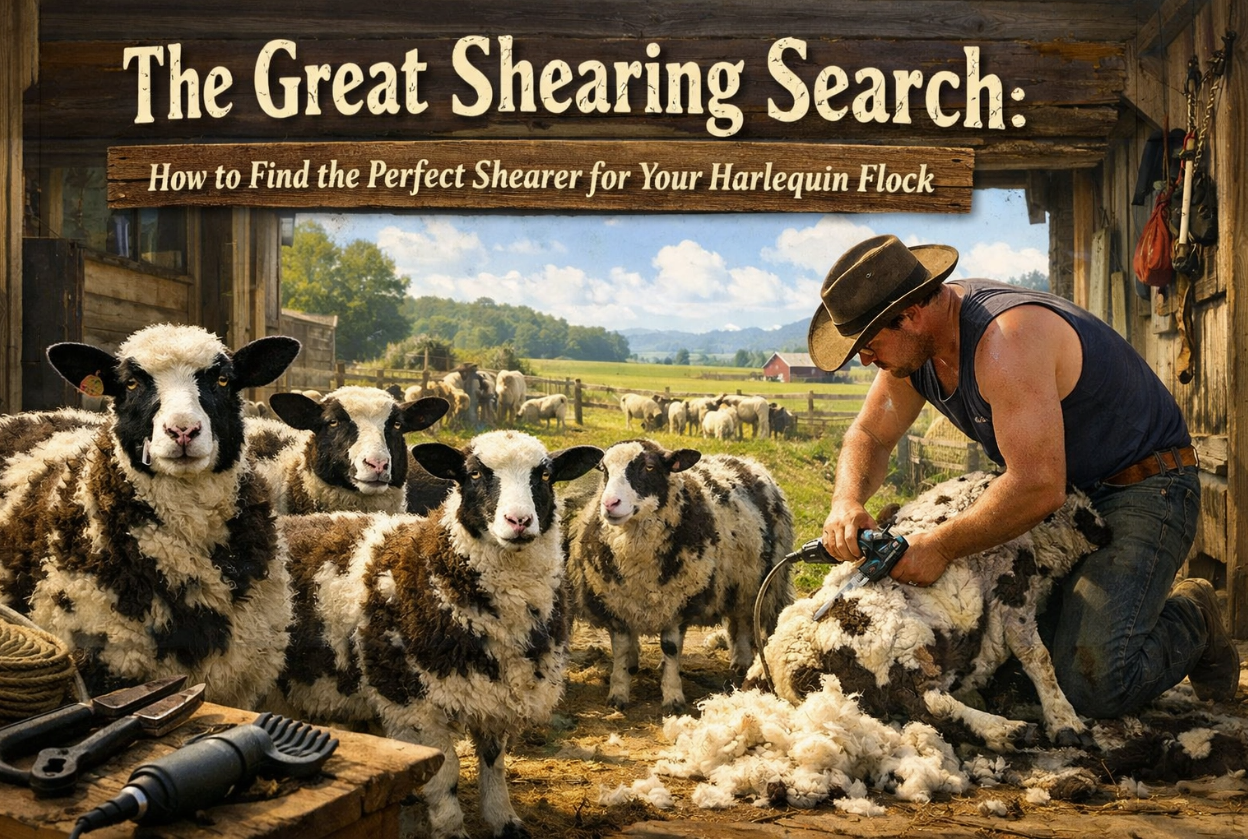
The Great Shearing Search: How to Find the Perfect Shearer for Your Harlequin Flock
Owning a flock of American Harlequin sheep is a rewarding venture that blends the joys of hobby farm livestock with the technical nuances of fine wool production. However, one of the most significant management hurdles for beginners is the annual shearing. Because Harlequins are a miniature sheep breed with specific fleece characteristics, finding the right professional is not merely a matter of convenience: it is an essential component of animal welfare and breed preservation.
At the Harlequin Sheep Society, we maintain that proper fleece management is a hallmark of a responsible breeder. Whether you are raising these animals for exhibition or producing high-quality wool for hand spinning, the shearing process dictates the health of your flock and the marketability of your fiber.
Why Shearing is Non-Negotiable for Harlequins
Shearing is more than a haircut; it is a critical health intervention. Harlequin sheep possess a dense, crimpy fleece that continues to grow throughout the year. If left unshorn, the sheep face several high-risk scenarios:
-
Thermal Regulation:
Even in temperate climates, a full winter coat becomes a liability in the spring and summer. Sheep cannot sweat effectively; they rely on the removal of their wool to shed heat.
-
Flystrike Prevention:
Overgrown wool, particularly around the breech area, can trap moisture and manure. This creates an environment for blowflies to lay eggs, leading to flystrike: a painful and often fatal condition.
-
Wool Quality for Fiber Arts:
For those targeting the fiber arts wool market, timing is everything. If wool is left too long, the "staple length" becomes unmanageable, and the tips may become weathered and brittle, reducing its value for hand spinners.
-
Health Inspections:
It is difficult to assess the body condition score (BCS) of a sheep under six inches of wool. Shearing allows you to see the true physical state of your ewes and rams, ensuring they are maintaining proper weight.
The Search: Using the Professional Directory
The most reliable method for finding a qualified professional is the American Sheep Industry (ASI) Shearer Directory. This resource allows you to filter by state and region to find individuals who are trained in professional shearing techniques.
When you use the directory, do not simply call the first name on the list. Professional shearers often have specific routes and schedules. If you are a small-scale producer, your approach must be strategic.
Small Flock Strategies for Hobby Farmers
Many professional shearers operate on a volume-based business model, often traveling between large ranches with hundreds or thousands of head. For a hobby farmer with five or ten miniature sheep, it can be difficult to get on a professional’s calendar. If you find yourself in this position, implement the following tactics:
-
The "Piggyback" Method:
Ask the shearer if they have other clients in your immediate area. If they are already visiting a nearby farm, they are much more likely to stop at yours for a smaller fee, as the travel cost is already covered.
-
The Drop-Off Option:
If you have a secure livestock trailer, ask if you can bring your sheep to the shearer while they are working at a larger venue.
-
Local Networking:
Check the HSSR Breeder Listing to find other Harlequin owners in your region. Pooling your flocks together at one location makes the visit more economically viable for a professional.
The Technical Interview: Questions to Ask
Once you have a list of potential candidates, you must vet them to ensure they understand the specific needs of Harlequin sheep. Use the following questions to gauge their suitability:
-
"Do you shear miniatures?"
Harlequins are significantly smaller than standard commercial breeds. A shearer accustomed to 200lb Rambouillets may find the ergonomics of a 60lb Harlequin challenging. Ensure they have the equipment and the patience for smaller frames.
-
"What is your minimum fee?"
Most shearers have a "setup fee" or a minimum charge to cover their travel and equipment maintenance. Expect to pay a premium per head for small flocks.
-
"Do you do hoof trimming too?"
Combining shearing with hoof maintenance is highly efficient. Many shearers offer this as an add-on service.
-
"What is your policy on 'second cuts'?"
If you are selling wool for hand spinning, you want a shearer who avoids second cuts (short bits of wool created when the shearer goes over an area twice). Second cuts are a nuisance for fiber artists and lower the grade of your fleece.
Preparing Your Farm for Shearing Day
The efficiency and safety of the shearing process depend heavily on the owner's preparation. A shearer is a highly skilled technician; you are the "pit crew." To ensure a professional experience, follow these requirements:
-
Dry Sheep are Mandatory:
Never present a wet sheep to a shearer. It is dangerous for the shearer (due to the electric clippers), and wet wool cannot be stored: it will rot. Pen your sheep under a roof at least 24 hours before your appointment if rain is in the forecast.
-
Fast Your Flock:
It is standard practice to withhold food (but not water) for 12 hours prior to shearing. This reduces the pressure on the sheep’s internal organs while they are being handled and kept in various positions.
-
Provide a Clean Surface:
The shearing area should be flat, shaded, and clean. A plywood shearing board or a clean rubber mat is ideal. This prevents the freshly cut wool from picking up straw, dirt, or debris.
-
Manage the Wool:
Have bags ready and labeled. If you are keeping the fleeces for fiber arts, have a skirting table (a frame with a wire mesh top) nearby to shake out the "second cuts" and debris immediately.
Harlequin Fleece: A Fiber Artist's Dream
The Harlequin breed is known for its unique color patterns and soft handle. When marketing your wool, emphasize that it is from a registered American Harlequin. Consistency in the clip is vital for maintaining the reputation of the breed as a source of premium fiber.
If your goal is to achieve the Breed Standard, you must monitor the fleece throughout the year. Avoid "vegetative matter" (VM) in the wool by feeding from ground level rather than overhead feeders, which drop hay into the neck wool.
DIY Shearing: Is it Worth It?
For those with very small flocks, the temptation to shear your own sheep is high. While some owners successfully learn to use manual blade shears or electric clippers like the Oster or Andis models, be aware of the learning curve. Professional shearing is a physically demanding skill that involves specific "blows" (strokes) to ensure the skin is pulled taut and not nicked.
If you choose the DIY route, we recommend attending a shearing school or finding a mentor. Improper shearing can lead to skin infections or permanent damage to the wool follicles. For beginners, the investment in a professional from the ASI directory is usually the safest and most efficient path.
Post-Shearing Care
Once the wool is off, your management duties continue. A freshly shorn Harlequin is vulnerable to the elements.
-
Weather Protection:
If a cold snap or heavy rain occurs immediately after shearing, ensure your sheep have access to a draft-free barn.
-
Sunburn:
Highly pigmented Harlequins have some natural protection, but sheep with significant white markings can get sunburnt if they have no shade in their paddocks.
-
Nutrition:
Sheep use a significant amount of energy to regrow their wool and maintain their body temperature without their "coat." You may need to slightly increase their caloric intake for the first two weeks post-shearing.
Summary of Action Items
-
Visit the Directory:
Go to SheepUSA.org and identify 3-5 shearers in your region.
-
Contact Early:
Shearing season is typically March through June. Book your slot in January or February.
-
Coordinate:
Reach out to other local owners of hobby farm livestock to see if you can schedule a group visit.
-
Prepare:
Review your barn setup and ensure you have a clean, dry space ready.
By prioritizing professional shearing, you protect your investment in the Harlequin breed and ensure your sheep remain healthy, productive, and beautiful. For more information on maintaining your flock's health, visit the Harlequin Sheep Society Home Page.